
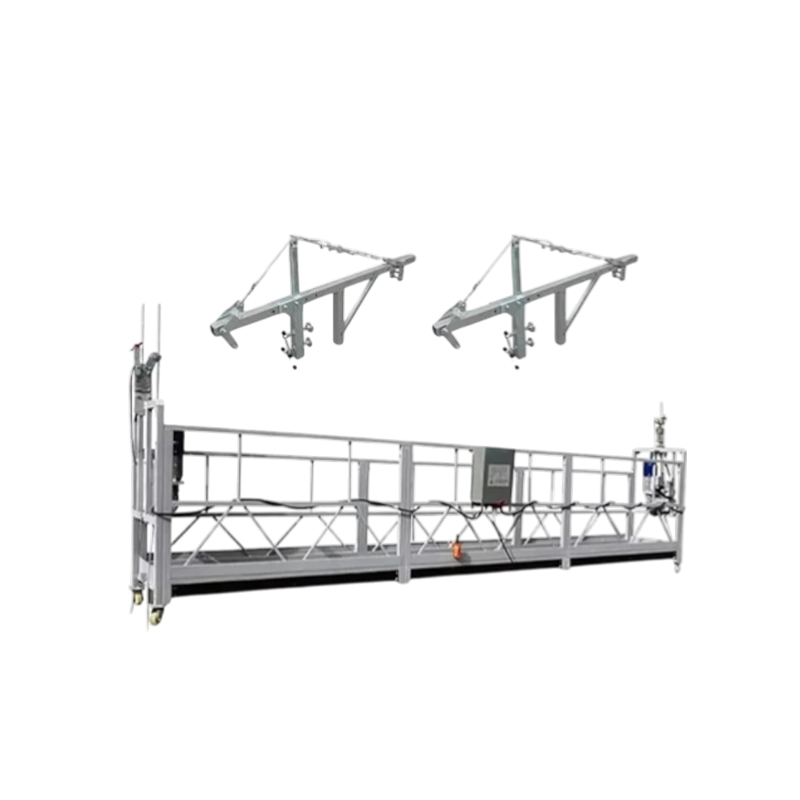
Suspended Platform
A suspended platform is a motorized, height-adjustable work platform that hangs from the top of a building using wire ropes, hoist motors, and outrigger beams. It gives workers safe and reliable access to any point on a building's exterior without the need for ground-supported scaffolding. Whether you are working on a high-rise construction project, building facade cleaning, bridge maintenance, or industrial repair work, a suspended platform delivers the flexibility, safety, and efficiency that modern projects demand. It is widely used across construction, real estate, oil and gas, infrastructure, and industrial maintenance sectors all over India and globally. At Topall Impex, we are the leading manufacturer of Suspended Platforms - Suspended Rope Platform, Commercial Construction Platform, Construction Suspended Platform and 7.5m Suspended Rope Platform offered by Topall Impex, New Delhi, Delhi. since 2008. Our platforms are built to meet Indian and international safety standards, offering superior load capacity, smooth vertical movement, and built-in safety features including overload protection and automatic fall arrest locks. We offer a complete range — from lightweight aluminum platforms to heavy-duty steel and roof-travelling systems — suitable for every project size and budget. With 16+ years of experience, in-house manufacturing, and strong after-sales support, Topall Impex is the name contractors and builders across Delhi and NCR trust for suspended platforms.
Technical Variants
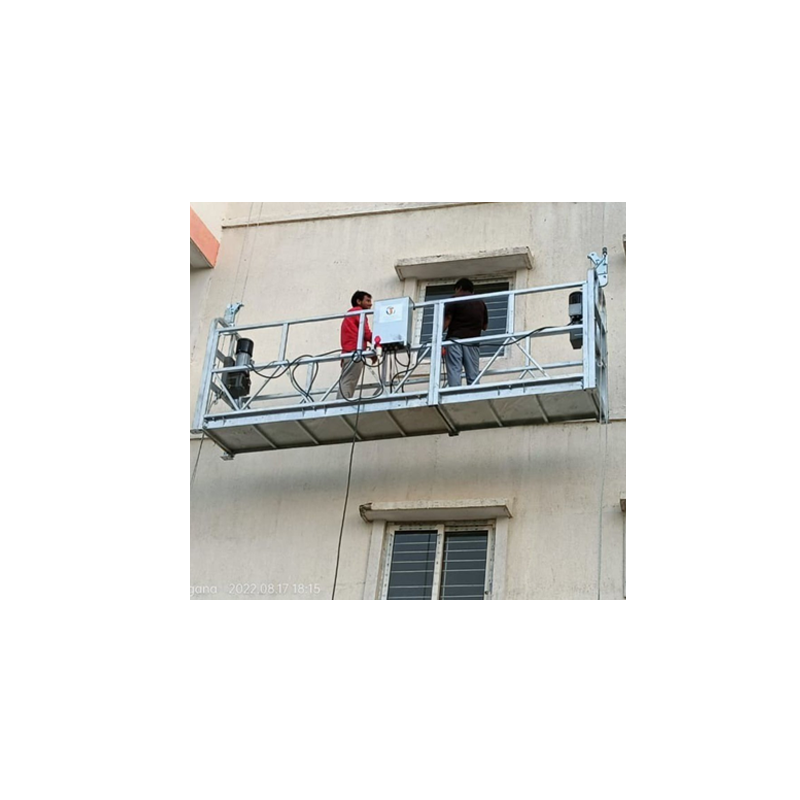
| Usage/Application | Gondola Platform |
| Suspended platform weight | 800 kg |
| Ascend speed | 8 – 10 m/min |
| Hoist Model | LTD 80 |
| Hoist Related Lifting Force | 8 KN |
| Rated Load | 800Kgs |
| Minimum Breaking force | ≥ 20 kN |
| Suspension mechanism Height adjustment | 1.2 – 1.8 m Adjustable |
| Whole Machine Weight | 1200 – 1500 kg |
| Country of Origin | Made in India |
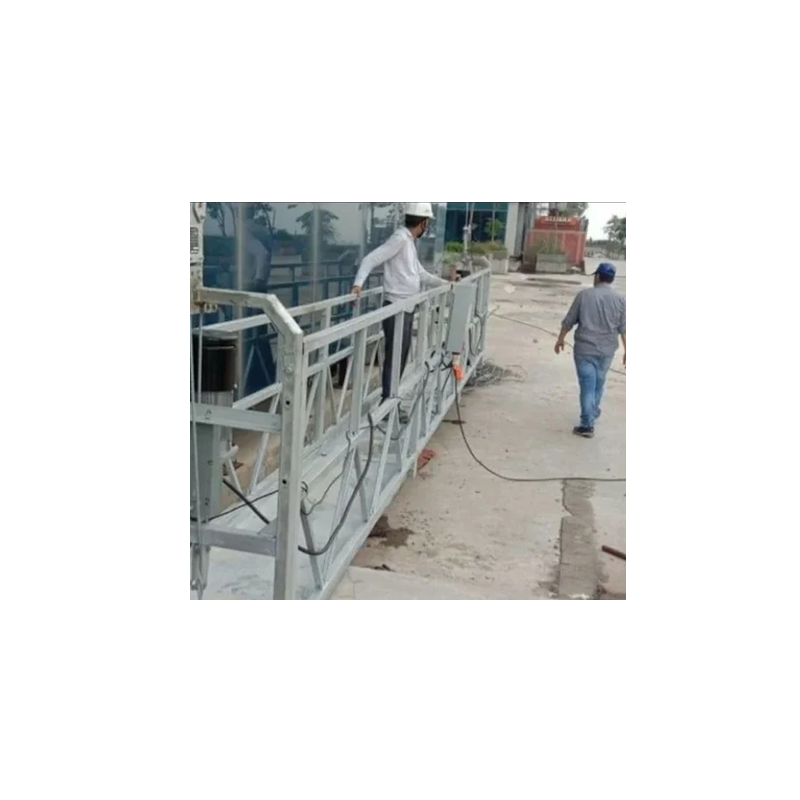
| Usage/Application | Working Platform |
| Balance Weight | 1000 - 1200Kg |
| Rated Load | 800Kg |
| Ascend speed | 8 – 10 m/min |
| Hoist Model | LTD 80 |
| Hoist Related Lifting Force | 8 KN |
| Electric Motor Voltage | 380 – 415 V |
| Suspension mechanism Height adjustment | 1.2 – 1.8 m Adjustable |
| Whole Machine Weight | 1200 – 1500 kg |
| Country of Origin | Made in India |
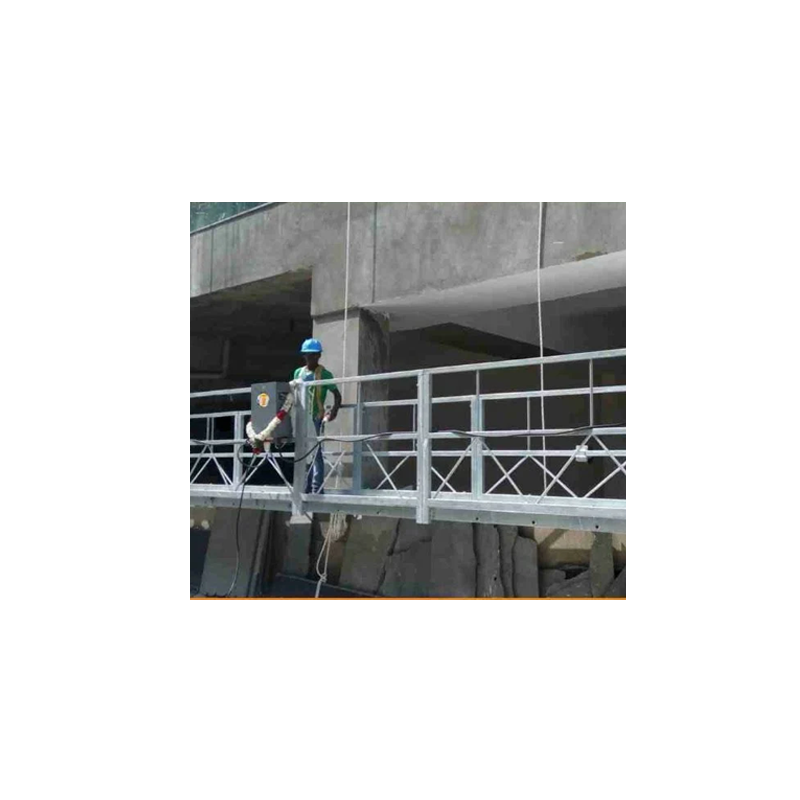
| Specification | Details |
| Model | ZLP 800 |
| Rated Load Capacity | 800 kgs |
| Platform Length | 7.5 Mts (2.5 mtr + 2.5 mtr | +1.5 mtr + 1 mtr) |
| Width | 2 feet |
| Wheels | 4 bottom wheels and 2 wall support wheels |
| Material | Hot Dip Galvanised |
| Height adjustment | 3.75 ft to 5.75 fts (adjustable distance 100 mm) |
| Hoist Model | ZLP 800 with electromagnetic brake motors. Alpha (a) type. |
| Hoist Power | 2.5 HP, 415 V, 50 hz |
| Hoist Quantity | 2 Pcs |
| Safety Lock Type | Anti Tilting, 30 KN. |
| Safety lock Quantity | 2 Pcs |
| Control Panel Quantity | 1 Pcs |
| Electric Cable | 2.5 mmx 5 core, 100 Mtr |
| Steel Wire Rope | 9.1 mm, 100 Mtrs |
| Steel Wire Rope Quantity | 4 nos, (2 nos. Working wire rope & 2 no. Safety wire rope) |
Delhi's Most Trusted Suspended Platform Manufacturer and Supplier Since 2008 - Topall Impex
A suspended platform is a motorized, height-adjustable work platform that hangs from the top of a building using wire ropes, hoist motors, and outrigger beams. It gives workers safe and reliable access to any point on a building's exterior without the need for ground-supported scaffolding. Whether you are working on a high-rise construction project, building facade cleaning, bridge maintenance, or industrial repair work, a suspended platform delivers the flexibility, safety, and efficiency that modern projects demand. It is widely used across construction, real estate, oil and gas, infrastructure, and industrial maintenance sectors all over India and globally. At Topall Impex, we are the leading manufacturer of Suspended Platforms - Suspended Rope Platform, Commercial Construction Platform, Construction Suspended Platform and 7.5m Suspended Rope Platform offered by Topall Impex, New Delhi, Delhi. since 2008. Our platforms are built to meet Indian and international safety standards, offering superior load capacity, smooth vertical movement, and built-in safety features including overload protection and automatic fall arrest locks. We offer a complete range — from lightweight aluminum platforms to heavy-duty steel and roof-travelling systems — suitable for every project size and budget. With 16+ years of experience, in-house manufacturing, and strong after-sales support, Topall Impex is the name contractors and builders across Delhi and NCR trust for suspended platforms.
What Is a Suspended Platform ?
A suspended platform (also called a hanging scaffold or swing stage) is a temporary elevated work platform suspended from the top of a building or structure using wire ropes, hoist motors, and outrigger beams. It allows workers to move vertically and horizontally along the face of a building while performing tasks at height. Unlike fixed scaffolding, a suspended platform is adjustable, moveable, and does not require ground support — making it the preferred choice for high-rise construction and maintenance projects.
In simple terms: A suspended platform is a motorized hanging platform that safely carries workers to any height on a building's exterior.
Where Suspended Platform Used For?
Suspended platforms are used across a wide range of industries and applications wherever working at height is required. Common use cases include:
- High-rise building construction — for plastering, painting, and finishing work on exterior walls
- Glass facade cleaning — for commercial towers, malls, and office buildings
- Bridge and dam maintenance — for inspection, repair, and painting
- Industrial chimney maintenance — for cleaning and structural repairs
- Power plant maintenance — for accessing elevated equipment safely
- Ship building and repair — for hull painting and maintenance work
- Airport and stadium maintenance — for exterior inspections and renovation
Wherever traditional scaffolding is impractical or too expensive, a suspended platform delivers the perfect alternative.
Benefits of using Suspended Platform
Choosing a suspended platform over conventional scaffolding brings many practical advantages to your project:
✅ Saves time — quick setup and takedown compared to fixed scaffolding
✅ Reduces cost — no need to erect full-length scaffolding for tall buildings
✅ Improves safety — equipped with safety locks, overload protection, and emergency stop systems
✅ Increases flexibility — workers can move the platform up, down, and sideways with ease
✅ Covers large areas — available in multiple lengths to cover wide building facades
✅ Works at any height — suitable for buildings from 10 meters to 300+ meters tall
✅ Minimal space required — does not occupy ground space, ideal for busy urban worksites
Why Suspended Platform is Important in Construction
Construction on high-rise buildings is one of the most challenging and dangerous operations in the industry. Without a proper access system, workers face serious risks. A suspended platform plays a vital role in modern construction because it:
- Provides a stable and secure working surface at any floor level
- Enables continuous workflow without interrupting ground-level operations
- Complies with safety standards and regulations (IS, CE, and international norms)
- Protects workers from fall hazards with guardrails, safety harnesses, and anti-fall locks
- Allows a small team to handle large surface areas efficiently
- Supports heavy tools and materials — reducing manual carrying at height
In today's construction environment, a suspended platform is not a luxury — it is a necessity.
How Does Suspended Platform works
Understanding how a suspended platform operates helps you use it safely and efficiently. Here is a step-by-step breakdown:
1. Outrigger Beams Are Installed on the Rooftop - Steel outrigger beams are fixed at the top of the building. These beams extend beyond the building edge and act as anchor points for the wire ropes.
2. Wire Ropes Are Attached - Steel wire ropes are connected to the outrigger beams and run down the face of the building. These ropes support the full weight of the platform and its occupants.
3. The Platform Is Connected to Electric Hoists - Electric hoist motors are mounted on the platform. These motors grip the wire ropes and drive the platform up or down when powered.
4. Workers Board the Platform - Once the platform is secured and tested, workers step on with their tools and equipment.
5. The Platform Moves Vertically - The operator controls the hoist motor to raise or lower the platform to the desired working height.
6. Safety Devices Activate Automatically - If the platform tilts beyond a safe angle or the rope speed becomes irregular, the automatic safety lock (fall arrest device) engages immediately to stop movement.
Types of Suspended Platform
Topall Impex offers a complete range of suspended platforms to meet every project requirement:
- Single Point Suspended Platform - Supported by a single wire rope and hoist. Ideal for small maintenance tasks or narrow surface areas.
- Two-Point Suspended Platform (Most Common) - Supported by two wire ropes at each end. This is the standard configuration used in most construction and maintenance projects. Available in lengths of 2m to 10m.
- Multi-Point Suspended Platform - Supported by three or more wire ropes. Used for very long platforms or heavy-duty industrial applications such as bridge maintenance.
- Motorized Suspended Platform - Equipped with electric hoist motors (typically 800W to 1500W) for smooth, controlled vertical movement. Suitable for regular high-rise projects.
- Manual Suspended Platform - Operated manually using rope and pulley systems. Used in areas where electricity supply is limited or for light-duty tasks.
- Aluminum Suspended Platform - Lightweight and corrosion-resistant. Ideal for coastal areas, painting jobs, and projects where portability matters.
- Steel Suspended Platform - Heavy-duty and highly durable. Best suited for industrial maintenance, power plants, and bridge repair projects.
- Roof-Travelling Suspended Platform - Mounted on a roof-travelling carriage system. Moves horizontally across the rooftop to cover the entire building perimeter without reinstalling the outrigger beams.
Application of Suspended Platform
- Construction - Exterior plastering, painting, cladding installation
- Real Estate - Building facade finishing and glass installation
- Oil & Gas - Refinery tank maintenance and chimney inspection
- Hospitality - Hotel exterior cleaning and facade renovation
- Aviation - Hangar maintenance and aircraft painting
- Utilities - Power tower and transmission line maintenance
- Infrastructure - Bridge painting and structural inspection
- Manufacturing - Industrial plant maintenance at height
Advantages of Suspended Platform
Many contractors still use conventional scaffolding out of habit. Here is why switching to a suspended platform is the smarter choice:
| Feature | Suspended Platform | Traditional Scaffolding |
|---|---|---|
| Setup Time | 2–4 hours | 2–5 days |
| Cost for High-Rise | Low | Very High |
| Ground Space Required | None | Large area |
| Height Flexibility | Any height | Limited |
| Portability | High | Low |
| Reusability | High | Moderate |
| Safety Features | Built-in automation | Manual |
New vs. Second-Hand Suspended Platform — Pros and Cons
When you are ready to buy a suspended platform, one of the first decisions you face is whether to go new or second-hand. Both options have real merit — but the right choice depends on your usage frequency, budget, and how critical the equipment is to your operations. Here is an honest breakdown of both sides.
New Suspended Platform
Pros:
Full Manufacturer Warranty — Every new suspended platform comes with a manufacturer warranty. If something fails within the warranty period, you are covered — no unexpected repair bills.
Latest Safety Standards — New platforms are built to current safety codes and regulatory standards. This matters especially in construction and industrial environments where compliance is non-negotiable.
Zero Wear and Tear — All components — motors, wire ropes, hoist units, safety locks, and structural members — are brand new and at full performance capacity from day one.
Better Technology — Modern suspended platforms come with improved hoist mechanisms, overload protection systems, anti-tilt devices, and smoother controls compared to older models.
Easier Spare Parts Access — Manufacturers actively support current models with readily available spare parts, making future maintenance faster and cheaper.
Longer Service Life Ahead — A new platform gives you the maximum possible years of productive use before major components need replacement.
Financing Options — Most dealers offer structured payment options on new equipment, making it easier to manage upfront costs.
Cons:
Higher Initial Investment — New suspended platforms cost significantly more upfront compared to second-hand units of similar capacity.
Lead Time — If the model you need is not in stock, you may have to wait for manufacturing or delivery — which can delay project timelines.
Second-Hand Suspended Platform
Pros:
Lower Purchase Price — The biggest advantage is cost. A second-hand suspended platform can cost 30% to 60% less than a new equivalent, making it attractive for budget-conscious buyers.
Immediate Availability — Second-hand units are usually available right away. No waiting period — you can deploy the platform as soon as the transaction is complete.
Suitable for Short-Term or Infrequent Use — If your need for a suspended platform is occasional or project-specific, a second-hand unit can serve the purpose without a large investment.
Good for Startups and Small Contractors — Businesses just entering the facade maintenance or construction space can start operations with lower capital risk.
Cons:
Unknown Service History — You rarely know how many hours the machine has been used, how it was operated, or how well it was maintained. Hidden wear can lead to early failures.
No Warranty — Second-hand platforms are almost always sold as-is. Any breakdown after purchase is entirely your cost and responsibility.
Safety Risks — Worn wire ropes, degraded safety locks, weakened structural welds, or faulty hoist units can all create serious safety hazards — especially when working at height.
Spare Parts Challenges — Older or discontinued models may have limited spare parts availability, making repairs slow, expensive, or impossible.
Compliance Issues — Older platforms may not meet current safety regulations and load standards, which can create legal liability on regulated job sites.
Higher Long-Term Costs — What you save upfront on purchase price, you may spend later on repairs, downtime, and parts.
Our Recommendation:
If suspended platforms are central to your business — facade cleaning, building maintenance, plastering, or construction finishing — invest in a new machine. The safety assurance, warranty coverage, and long-term reliability justify the higher upfront cost.
If your usage is short-term, low-frequency, or you are just getting started — a thoroughly inspected second-hand platform from a reputable dealer can be a practical starting point. Always insist on a full inspection report before purchasing any second-hand unit.
What to Check Before Buying a Suspended Platform — Complete Checklist
Buying a suspended platform is a significant investment — and because this equipment operates at height, the stakes are higher than most other machinery purchases. A wrong decision does not just cost money. It can cost lives. Use this complete checklist before signing any purchase agreement.
Application and Site Requirements
- What is the maximum working height you need to reach?
- What is the width of the building or structure facade you need to cover?
- What is the maximum load capacity required — including workers, tools, and materials?
- Will the platform be used on a single project or multiple sites?
- Does your site require a single-point or two-point suspended platform?
- Are there any site-specific constraints — setbacks, parapets, rooftop obstructions?
Platform Structural Integrity
- Is the platform cradle made from high-grade aluminum alloy or galvanized steel?
- Are all welded joints clean, uniform, and free from cracks, corrosion, or repairs?
- Check the platform floor — is it non-slip, intact, and free from deformation or damage?
- Are all guardrails, toe boards, and safety rails securely fixed and at the correct height?
- Inspect all connection points between platform sections for tightness and alignment.
Hoist Unit and Motor
- What is the rated load capacity of the hoist — does it match your requirements?
- Is the hoist unit certified by a recognized testing authority?
- Check the motor — does it run smoothly without unusual noise, heat, or vibration?
- Is the hoist speed appropriate for your working conditions?
- Verify that the hoist has a built-in overload protection system.
- Check the brake mechanism — does it engage and release cleanly?
Wire Ropes and Suspension System
- Inspect all wire ropes for broken strands, kinks, corrosion, or flattening — any of these are immediate disqualifiers.
- Verify that wire rope diameter and grade match the manufacturer's specifications.
- Check wire rope anchoring points — clamps, thimbles, and terminations must be secure and correctly installed.
- Are the suspension wire ropes the correct length for your working height?
- Inspect rope drums or rope guides inside the hoist for wear.
Safety Devices
- Is a certified fall arrest safety lock (also called a safety device or anti-drop device) installed on every wire rope?
- Test the safety lock — it must engage automatically when the platform tilts beyond the permitted angle.
- Is there a working overload limiter on the hoist?
- Check for an emergency stop button — it must be clearly marked and immediately accessible.
- Is there a working limit switch that stops the platform at the top and bottom travel limits?
- Verify that the platform has anchor points for personal fall arrest harnesses.
Suspension Mechanism (Outriggers / Roof Rigging)
- Are the outrigger beams made from structural steel or high-grade aluminum with clear load markings?
- Inspect outrigger bases, clamps, and counter-weight systems for condition and compliance.
- Verify that counter-weights are the correct type and quantity specified by the manufacturer — never substitute with random weights.
- Are all outrigger connection pins and locking mechanisms in good condition?
- Check that the outrigger span and overhang are adjustable to suit your site conditions.
Electrical System
- Is the electrical control box properly sealed against dust and moisture?
- Check all wiring for fraying, exposed conductors, or improper connections.
- Is the electrical system rated for the correct supply voltage at your site?
- Verify that the platform has proper earthing and residual current protection (ELCB or RCD).
- Is the power cable long enough for your working height — and in good condition throughout its length?
Certifications and Documentation
- Does the platform carry a valid load test certificate from an accredited testing body?
- Is the CE mark or relevant national safety certification present and current?
- Ask for the original manufacturer's manual — operating instructions, maintenance schedule, and spare parts list.
- For second-hand platforms — request the full service and maintenance history.
- Check whether the platform meets your country's or site's specific safety regulations.
Supplier Credibility
- How long has the supplier been dealing in suspended platforms?
- Do they have verified customer references or documented project experience?
- Do they offer installation, commissioning, and operator training after purchase?
- Is there a local service team available for ongoing maintenance and emergency support?
- Do they stock genuine spare parts — especially hoist components, wire ropes, and safety locks?
- What is the warranty terms — and what does it cover?
Total Cost of Ownership
- What is the purchase price — and what is included (accessories, spare ropes, training)?
- What are the expected annual maintenance costs?
- How easy and affordable are spare parts to source?
- What is the realistic service life of the platform under your intended usage pattern?
- Does the supplier offer a service contract or maintenance package?
Final Word Before You Buy:
Never rush a suspended platform purchase. Take your time, ask every question on this checklist, and only buy from a supplier who gives you clear, documented answers. When people work at height — the quality and condition of the equipment they stand on is not a detail. It is everything.
How to Choose the Right Suspended Platform
Picking the right suspended platform for your project requires careful consideration of several factors:
1. Working Height Determine the maximum height your workers will need to reach. This decides the wire rope length and hoist motor power you need.
2. Platform Length Choose the platform length based on the surface area you need to cover per pass. Standard sizes range from 2 meters to 10 meters.
3. Load Capacity Calculate the total weight of workers, tools, and materials that will be on the platform at one time. Most standard platforms carry 250kg to 630kg.
4. Power Source Confirm whether electrical power is available on the roof. If not, opt for a manual or generator-powered hoist system.
5. Building Structure Check whether your building's rooftop can support the outrigger beam installation. For buildings without a parapet, special anchor systems may be required.
6. Frequency of Use For regular, long-term projects — choose a heavy-duty steel platform. For occasional or short-term use — a lightweight aluminum platform works well.
7. Safety Certifications Always choose a platform that complies with IS 12817, EN 1808, or relevant local safety standards. At Topall Impex, all our platforms meet required safety certifications.
Safety Tips for operating Suspended Platform
Safety is non-negotiable when working at height. Follow these essential practices every time you use a suspended platform:
🔒 Always wear a full-body safety harness and attach it to a separate lifeline — never to the platform itself
🔒 Inspect the wire ropes before every use — look for kinks, broken strands, or corrosion
🔒 Never overload the platform — strictly follow the rated load capacity
🔒 Check all electrical connections and hoist motors before starting the platform
🔒 Ensure outrigger beams are properly counterweighted as per manufacturer specifications
🔒 Do not work in strong winds (above 45 km/h) or during thunderstorms
🔒 Keep the platform level at all times — a tilt beyond 3° should trigger an immediate stop
🔒 Train all operators before allowing them to use the platform independently
🔒 Install toe boards and guardrails on all open sides of the platform
🔒 Conduct a trial run at ground level before lifting the platform to working height
Suspended Platform Maintenance Tips & Checklist - Guide
Regular maintenance extends the life of your platform and keeps your workers safe. Follow this checklist:
Daily Maintenance Checklist
- Inspect wire ropes for wear, fraying, or kinking
- Check hoist motor operation — listen for unusual sounds
- Verify safety lock functionality
- Inspect platform frame for cracks or deformations
- Check all electrical cables and connections
- Test emergency stop button
Weekly Maintenance Checklist
- Lubricate wire ropes with approved rope lubricant
- Inspect outrigger beams and clamps for tightness
- Check counterweights — ensure correct placement and weight
- Clean the hoist motor casing and ventilation slots
- Inspect all bolts and fasteners — tighten if required
Monthly Maintenance Checklist
- Full inspection of the safety lock mechanism
- Test the overload protection system
- Check the condition of platform planks or deck panels
- Inspect wire rope anchors and sheaves
- Record all maintenance activities in a logbook
Annual Maintenance
- Send the platform for a professional load test and recertification
- Replace wire ropes if they have completed 12 months of regular use
- Service hoist motors at an authorized service center
Problem and Solutions of Suspended Platforms
Problem - Platform not lifting
Likely Cause - Power failure or motor fault
Solution - Check power supply and motor connections
Problem - UPlatform tilting to one side
Likely Cause - Uneven load or rope slack difference
Solution - Redistribute load; adjust rope lengths
Problem - Safety lock engaging frequently
Likely Cause - Worn rope or platform instability
Solution - Inspect ropes; check platform balance
Problem - Hoist making unusual noise
Likely Cause - Insufficient lubrication or worn gears
Solution - Lubricate and service the hoist unit
Problem - Wire rope jumping off sheave
Likely Cause - Sheave misalignment
Solution - Realign sheave and inspect rope condition
Problem - Slow platform movement
Likely Cause - Overloaded platform
Solution - Remove excess load to within rated capacity
Why Choose Topall Impex for Suspended Platform
With so many suppliers in the market, choosing the right manufacturer matters. Here is why contractors, builders, and maintenance companies across India trust Topall Impex:
✅ 16+ Years of Industry Experience (Since 2008) - We have supplied suspended platforms to hundreds of projects across Delhi, NCR, and pan-India. Our experience means you get a product that is field-tested and reliable.
✅ In-House Manufacturing - We manufacture our platforms at our own facility — which means tighter quality control, faster delivery, and competitive pricing without middlemen.
✅ Certified and Standards-Compliant Products - All our suspended platforms comply with relevant Indian and international safety standards. You get a product that your safety officer will approve.
✅ Wide Product Range - From 2-meter single-point platforms to 10-meter roof-travelling systems, we supply the right platform for every project type and budget.
✅ Custom Manufacturing Available - If your project has unique requirements — special dimensions, higher load capacity, or non-standard configurations — we manufacture custom platforms to your exact specification.
✅ After-Sales Service and Spare Parts - We provide comprehensive after-sales support, AMC contracts, and readily available spare parts so your platform stays operational throughout your project.
✅ Competitive and Transparent Pricing - No hidden charges. No surprise costs. We give you a clear and fair quotation based on your exact requirement.
✅ Trusted by Leading Contractors - Our clients include leading construction companies, real estate developers, industrial maintenance firms, and government projects across India.
Explore Suspended Platform Price / Cost in Delhi, India - Topall Impex
Suspended platform prices in Delhi vary based on several factors:
- Platform length (2m, 3m, 6m, 8m, 10m)
- Load capacity (250kg, 500kg, 630kg)
- Hoist motor power (800W, 1000W, 1500W)
- Material (aluminum vs. steel)
- Type (standard two-point vs. roof-travelling system)
- Accessories (extra wire rope length, safety devices, carry bags)
2-Point Aluminum Platform (3m) - ₹55,000 – ₹85,000
2-Point Steel Platform (6m) - ₹90,000 – ₹1,40,000
Heavy-Duty Steel Platform (10m) - ₹1,50,000 – ₹2,50,000
Roof-Travelling Platform System - ₹3,00,000 – ₹6,00,000+
Manual Suspended Platform - ₹35,000 – ₹60,000
Note: Prices are indicative and subject to change based on specifications and market conditions. Contact us for a live, project-specific quotation. We also offer rental options for short-term projects — ask our team for details.
Contact Topall Impex (BarBendingMachine.in) For Suspended Platform At Best Price in Delhi - Trusted Manufacturers and Suppliers in Delhi Since 2008
Ready to get the right suspended platform for your project? Our team is available to help you select the best model, provide a customized quotation, and arrange fast delivery anywhere in Delhi and NCR.
📞 Call / WhatsApp: [+918588808992 , +919716467843 ] 📧 Email: [nitesh@topallimpex.in] 🌐 Website: BarBendingMachine.in 📍 Address: [783/784, Aggarwal Cyber Plaza-II, Netaji Subhash Place Pitampura, Delhi - 110034., Delhi, India]
Business Hours: Monday to Saturday — 9:00 AM to 6:00 PM